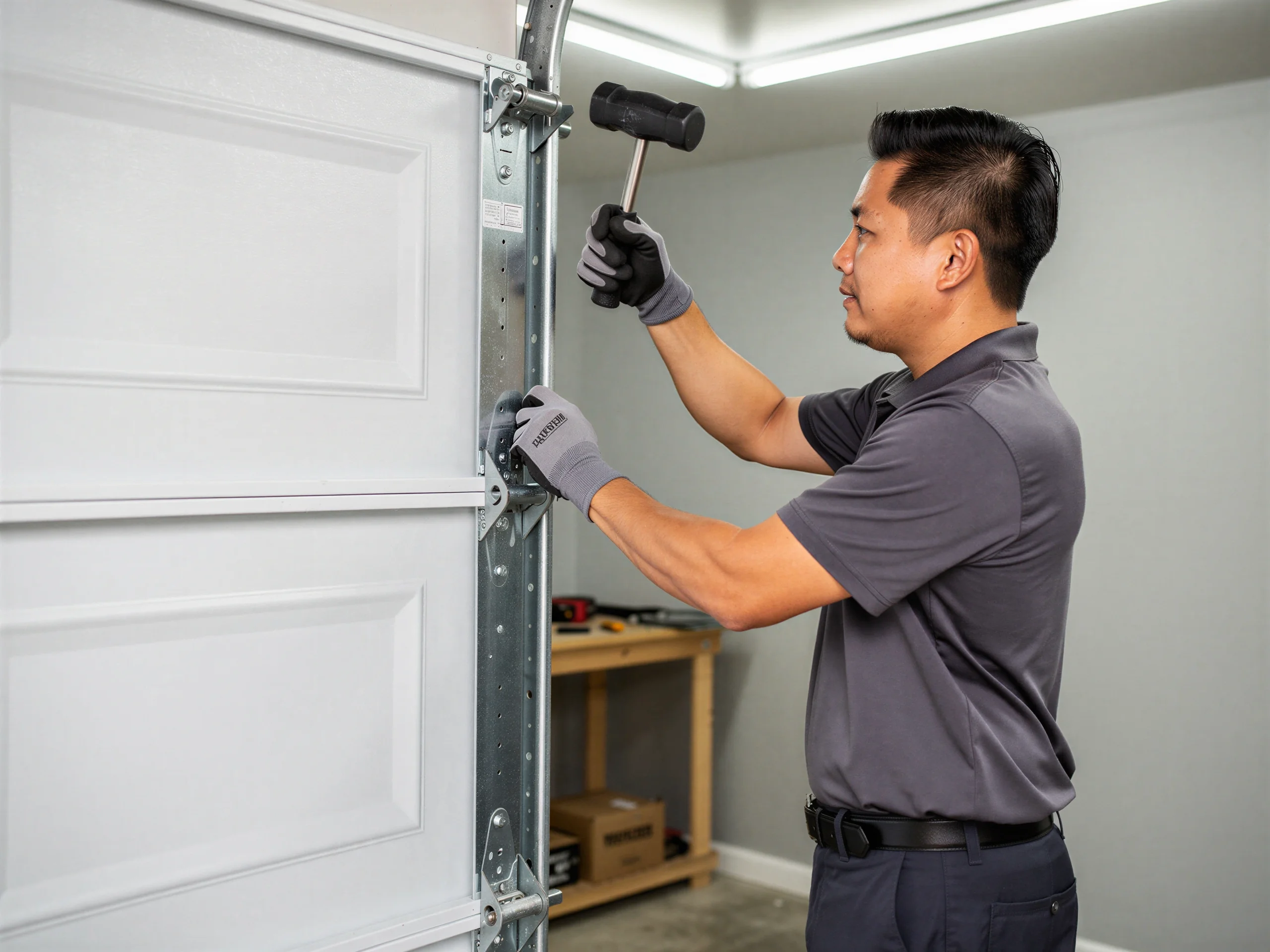
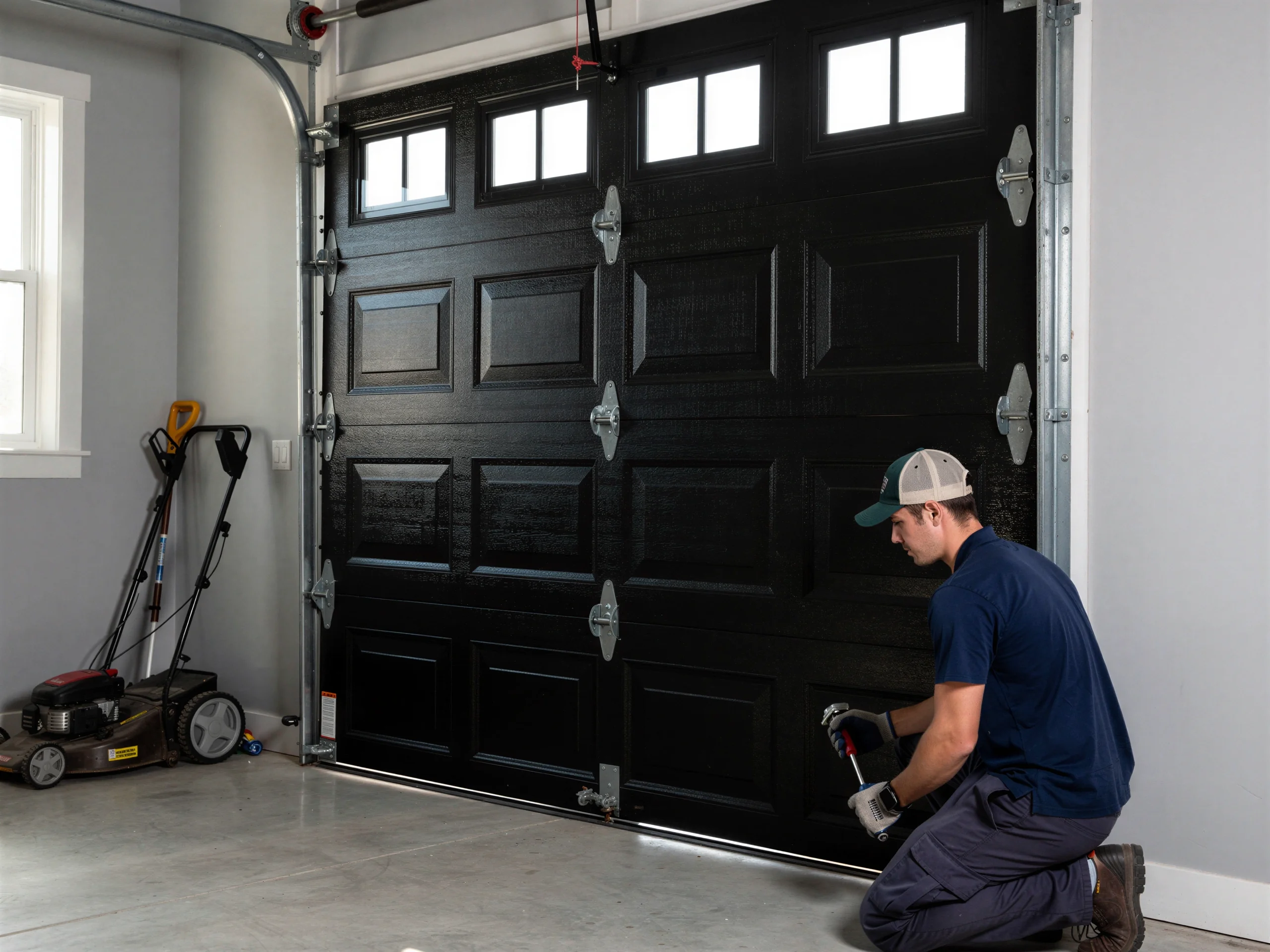
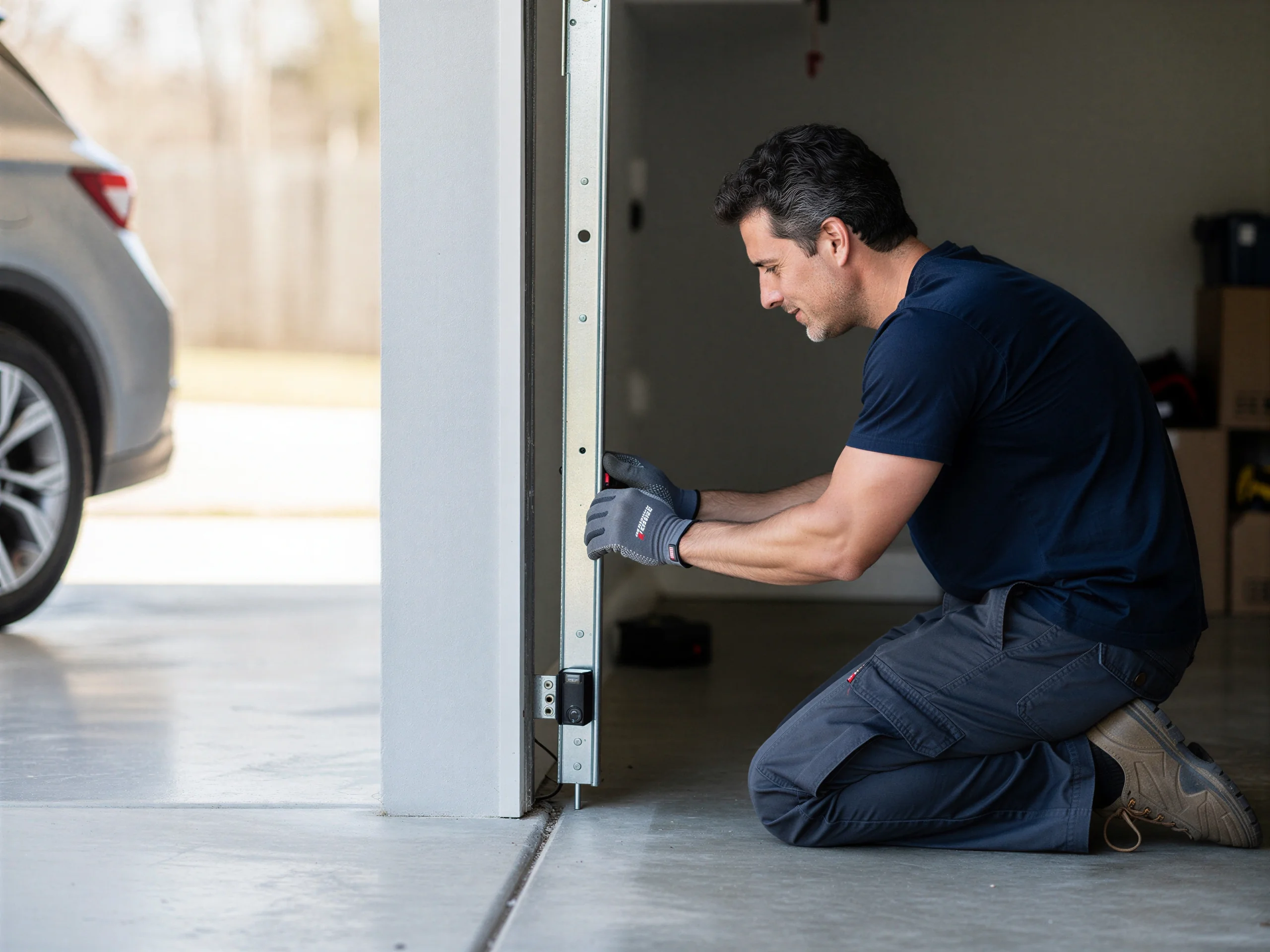
Most of the housing stock across this service area went up between 1972 and 2005, with a median build year around 1998, and a big share of that is 1980s and 90s construction. Doors from that era were hung on light-gauge steel track with roller brackets that were never meant to flex much. Over three decades, the lag screws that hold the track to the jamb back out a sixteenth of an inch at a time, and the track itself starts to bow at the seams where two sections bolt together.
Add a cold, moderate climate to that and you get a second problem on top of the first: the metal track contracts in winter cold snaps, which tightens the gap tolerances right at the spot where the rollers already ride loose. A door that tracked fine in August can start grinding or hopping the rail in January on the exact same hardware. This isn't a defect in any one door. It's what happens when a specific generation of builder-grade track meets a freeze-thaw climate for 25-plus years. We see the same failure pattern across the service area, not in one neighborhood.
It's also why patch fixes rarely hold for long on these doors. Bending a track back into line gets you through the week, but the metal has already fatigued at that bend point, and it tends to walk out of alignment again faster the second time.